News
Taste Taiwan, Learn Mandarin: Taiwan Eats × Mandarin Learning in New York
- September 21, 2026
- Posted by: TCML NYTC
- Category: Culture & Community Learn Mandarin
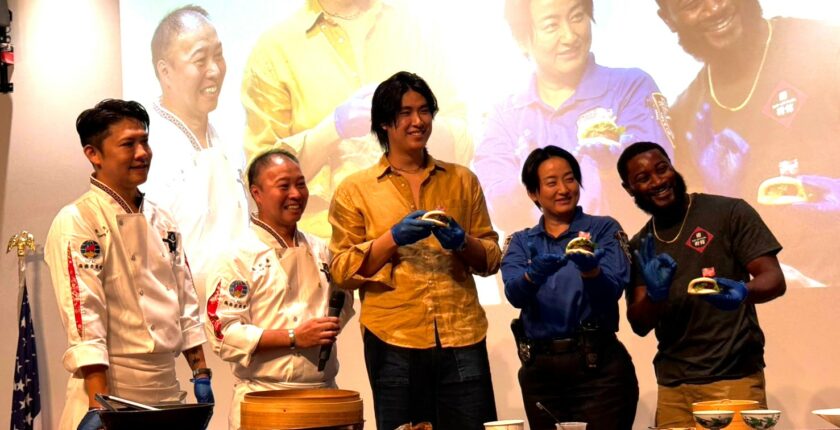
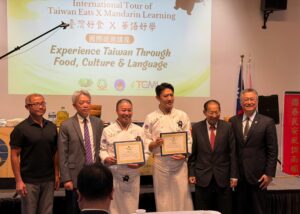
On September 9, more than 100 participants gathered in Flushing, New York, for the 2026 International Tour of Taiwan Eats × Mandarin Learning, an evening that brought together Taiwanese food, cultural exploration, and Mandarin learning.
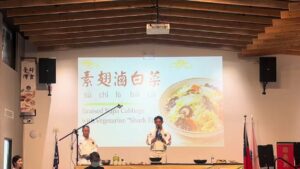
Hosted by the Buddhist Tzu Chi Foundation, Northeast Region, in collaboration with TCML-New York Taiwan Center, the program welcomed guest chefs Ko-Chin Chang (張克勤) and Kaiyuan Lu (路凱源) from Taiwan. The chefs demonstrated three vegetarian dishes: Vegetarian Gua Bao (素食刈包), Four-Delight Braised Wheat Gluten (四喜烤麩), and Braised Napa Cabbage with Vegetarian “Shark Fin” (素翅滷白菜).
Guests also enjoyed a selection of Taiwanese treats, including Five-Grain Savory Pancakes (五穀香鬆餅), Plum Black Tea Jelly (梅子紅茶凍), and Black Sesame Mochi (黑芝麻麻糬). The chefs even added a special, impromptu demonstration of “Too Soft-Hearted” (心太軟), a sweet treat made with red dates and glutinous rice.
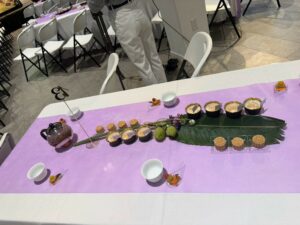
But this was more than a cooking demonstration. TCML turned the kitchen into a real-life Mandarin classroom.
As the chefs prepared each dish, participants learned Mandarin vocabulary and explored the cultural stories behind the food. Through 刈包 (guà bāo), guests learned why this popular Taiwanese food is sometimes nicknamed 虎咬豬 (hǔ yǎo zhū, “tiger bites pig”). Participants were also invited on stage to assemble their own vegetarian gua bao alongside the chefs, turning new vocabulary into a hands-on experience.
The dish 四喜烤麩 (sì xǐ kǎo fū) offered another opportunity to explore the cultural meanings behind Chinese food names. 四喜 (sì xǐ), or “Four Delights,” conveys happiness and good fortune, showing how language, food, and cultural traditions can come together in a single dish.
With 素翅滷白菜 (sù chì lǔ bái cài), the conversation expanded to changing eating habits and environmental awareness. The vegetarian “shark fin,” made from glass noodles instead of traditional shark fin and combined with a total of 11 ingredients, offered a new interpretation of a traditional banquet dish. Through the words 魚翅 (yú chì, shark fin) and 素翅 (sù chì, vegetarian “shark fin”), participants explored how changes in food choices can also reflect evolving lifestyles and environmental awareness.
The dishes also gave many participants a new perspective on vegetarian cuisine. One guest shared that they had not expected vegetarian food to be so flavorful, while another—who normally did not enjoy glass noodles—was surprised by their flavor and texture when transformed into 素翅 (sù chì).
The evening also highlighted how closely food is connected to everyday life in Taiwan. Ambassador Tom Chih-Chiang Lee, Taipei Economic & Cultural Office in New York, shared familiar Taiwanese expressions such as 「呷飽未?」 (“Have you eaten?”) and 「呷飯皇帝大」, a Taiwanese saying that emphasizes the importance of taking time to eat, no matter how busy life gets. Together, these expressions show how food is deeply woven into everyday life and relationships in Taiwan.
Most meaningful to us was seeing food become a bridge to continued language learning. After the event, one participant reached out to thank us for introducing TCML’s Mandarin classes and shared how much he and his wife enjoyed the program and hosting.
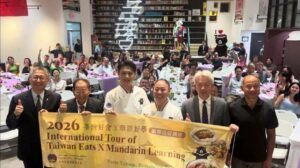
Through cooking demonstrations, cultural stories, and practical Mandarin, Taiwan Eats × Mandarin Learning showed that language learning does not have to stay inside the classroom. Food can become a starting point for discovering new words, new traditions, and a deeper connection with Taiwan.
A special thank you to the Culture Center of TECO in New York for bringing TCML-New York Taiwan Center and the Buddhist Tzu Chi Foundation, Northeast Region together for this program, and to the Overseas Community Affairs Council (OCAC) for its support.
One meal can introduce a dish. One dish can open a door to language and culture.
Interested in Learning Mandarin?
At TCML-New York Taiwan Center, we offer Mandarin classes for adult learners in New York, combining Traditional Chinese, practical language skills, and Taiwanese cultural experiences to make Mandarin part of everyday life.
從「吃」開始學華語!「臺灣好食 × 華語好學」紐約登場
9月9日晚間,由慈濟基金會美國紐約分會主辦、台灣華語文學習中心-紐約台灣會館(TCML-New York Taiwan Center)協辦的「2026 臺灣好食 × 華語好學國際巡迴講座」於紐約華僑文教服務中心熱鬧登場。活動結合臺灣美食、料理示範、文化分享與華語學習,吸引超過百位民眾參與,讓大家從味蕾出發,在品嚐臺灣料理的同時,自然而然地接觸華語、認識臺灣文化。
活動邀請來自臺灣的張克勤、路凱源兩位主廚進行現場料理示範,以「素食刈包」、「四喜烤麩」及「素翅滷白菜」三道料理,介紹食材選擇、備料方式與烹調技巧;現場另準備「五穀香鬆餅」、「梅子紅茶凍」、「黑芝麻麻糬」等點心,讓參與者透過不同風味,感受臺灣豐富多元的蔬食文化。活動當晚,主廚更臨時加碼示範甜點「心太軟」,為原訂料理示範增添一份驚喜。
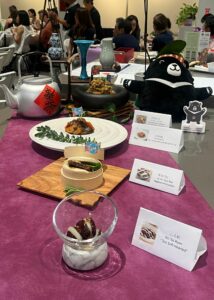
一道道料理上桌,也讓不少參與者對素食有了新的印象。有參與者品嚐後表示,原本沒想到素食料理可以如此美味;也有人分享,自己過去並不喜歡冬粉,沒想到冬粉製成「素翅」後,與多種食材一同烹調,呈現出的風味與口感令人驚喜。從一道料理、一種食材開始,參與者不僅品嚐臺灣味,也重新發現素食料理豐富多元的可能。
這場活動的一大特色,是讓料理示範同時成為一堂生活華語課。料理示範過程中,主持人配合主廚現場操作,以中、英文雙語介紹料理名稱、食材與實用華語,並運用僑務委員會提供的華語教材,讓不同華語程度及文化背景的參與者,都能跟著一道道料理自然接觸華語。
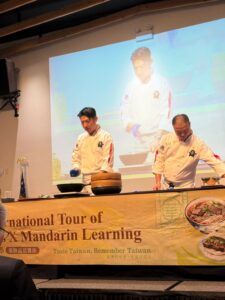
在「素食刈包」示範中,參與者不只學習「素食」、「刈包」等詞彙,也進一步認識刈包在臺灣俗稱「虎咬豬」的有趣由來。主廚以車麩取代傳統五花肉,搭配臺灣風味酸菜及花生粉,並邀請民眾上台親手組裝刈包。從聽中文名稱、認識食材,到動手完成一道料理,華語也自然而然地融入實際體驗之中。
「四喜烤麩」則成為認識中文料理名稱與飲食文化的另一個有趣入口。主廚介紹烤麩的製作與烹調方式,說明烤麩由麵團洗去澱粉後留下的麵筋製成,料理時以手剝成小塊、炸至酥脆,再與香菇、筍子等食材一同滷製,使烤麩充分吸收醬汁。
華語教學也從「四喜」延伸至中文菜名背後的文化意涵。中文料理名稱有時來自烹調方式,有時取自地名、人物、外形或吉祥寓意,而「四喜」便帶有喜慶、吉祥之意。透過一道料理,參與者學到的不只是新的中文詞彙,也進一步看見語言與飲食文化之間的連結。
「素翅滷白菜」則從一道料理帶出飲食文化與現代生活的轉變。過去「魚翅」常見於宴席料理中,隨著現代飲食習慣的改變,以及環保與永續意識逐漸受到重視,傳統料理也有了新的詮釋。這次主廚以冬粉製成的「素翅」取代傳統魚翅,搭配白菜等共11種食材,呈現層次豐富的素食料理。
華語教學也從「魚翅」與「素翅」兩個詞彙出發,讓參與者從一字之差認識食材與飲食選擇的改變,同時了解飲食文化如何隨著現代生活方式與環保意識,發展出新的樣貌。
駐紐約台北經濟文化辦事處李志強大使也在活動中分享臺灣飲食與日常生活的緊密連結,從臺語問候「呷飽未?」談到「呷飯皇帝大」,呈現臺灣人如何透過飲食傳遞關懷、建立人與人之間的情感連結。
美食也成為參與者進一步接觸華語學習的橋梁。活動結束後,有參與者特別來信感謝現場介紹華語課程,並分享他與妻子都非常享受當天的活動與主持。這份活動後主動收到的回饋,也讓「臺灣好食 × 華語好學」不只停留在一晚的美食體驗,更進一步開啟參與者認識華語課程、持續學習華語的可能。
此次「臺灣好食 × 華語好學」透過料理示範、華語教學與文化體驗,讓參與者在自然的生活情境中接觸華語,也讓來自不同文化背景的民眾,從最容易親近的「美食」開始認識臺灣。
特別感謝紐約華僑文教服務中心促成此次合作,讓台灣會館TCML有機會與慈濟基金會美國紐約分會攜手完成這場活動,也感謝僑務委員會的支持。
一頓飯,可以認識一道料理;一道料理,也可以打開一扇通往語言與文化的門。
想學華語嗎?
台灣華語文學習中心-紐約台灣會館提供成人華語課程,使用繁體中文,並將實用華語與臺灣文化融入學習,讓華語不只存在於課本裡,也能走進日常生活。